Sculpture is the branch of the visual
arts that operates in three dimensions. Durable sculptural processes originally
used carving (the removal of material) and modelling (the addition of material,
as clay), in stone, metal, ceramics, wood and other materials but, since
modernism, shifts in sculptural process led to an almost complete freedom of
materials and process. A wide variety of materials may be worked by removal
such as carving, assembled by welding or modelling, or moulded, or cast.
A basic distinction is between sculpture
in the round, free-standing sculpture, such as statues, not attached (except
possibly at the base) to any other surface, and the various types of relief,
which are at least partly attached to a background surface. Relief is often
classified by the degree of projection from the wall into low or bas-relief,
high relief, and sometimes an intermediate mid-relief. Sunk-relief is a
technique restricted to Ancient Egypt.
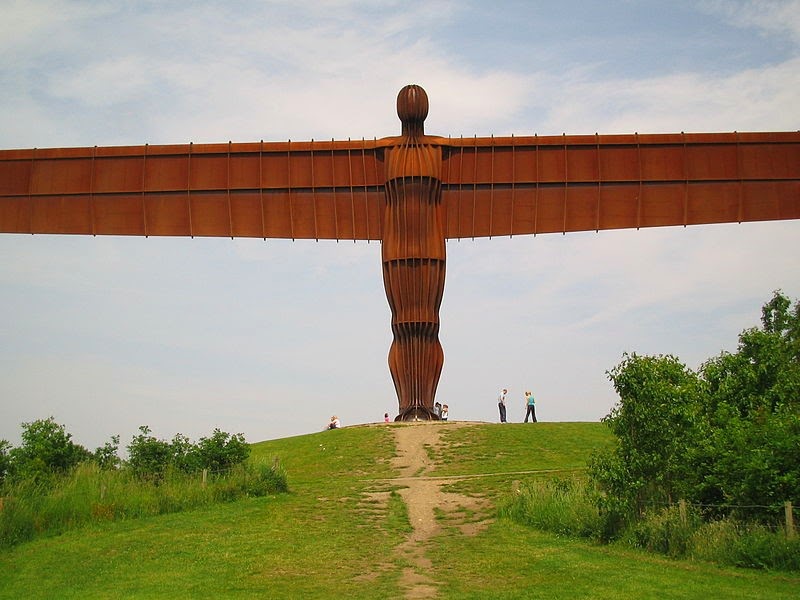 |
| Angel of the North |
 |
Michelangelo's Moses, (c. 1513–1515), housed in the church
of San Pietro in Vincoli in Rome. The sculpture was commissioned in 1505 by Pope
Julius II for his tomb.
|
Gilbert &
George
Gilbert Prousch, sometimes referred to as Gilbert Proesch,
(born 17 September 1943 in San Martin de Tor, Italy) and George Passmore (born
8 January 1942 in Plymouth, United Kingdom) are two artists who work together
as a collaborative duo called Gilbert & George. They are known for their
distinctive and highly formal appearance and manner and also for their brightly
coloured graphic-style photo-based artworks.
Whilst still students, Gilbert
& George made The Singing Sculpture, which was first performed at Nigel
Greenwood Gallery in 1970. For this performance they covered their heads and
hands in multi-coloured metallised powders, stood on a table, and sang along and
moved to a recording of Flanagan and Allen's song "Underneath the
Arches", sometimes for a day at a time. The suits they wore for this
became a sort of uniform for them. They rarely appear in public without wearing
them. It is also unusual for one of the pair to be seen without the other. The
pair regard themselves as "living sculptures". They refuse to
disassociate their art from their everyday lives, insisting that everything
they do is art.


.jpg)


.png)


